
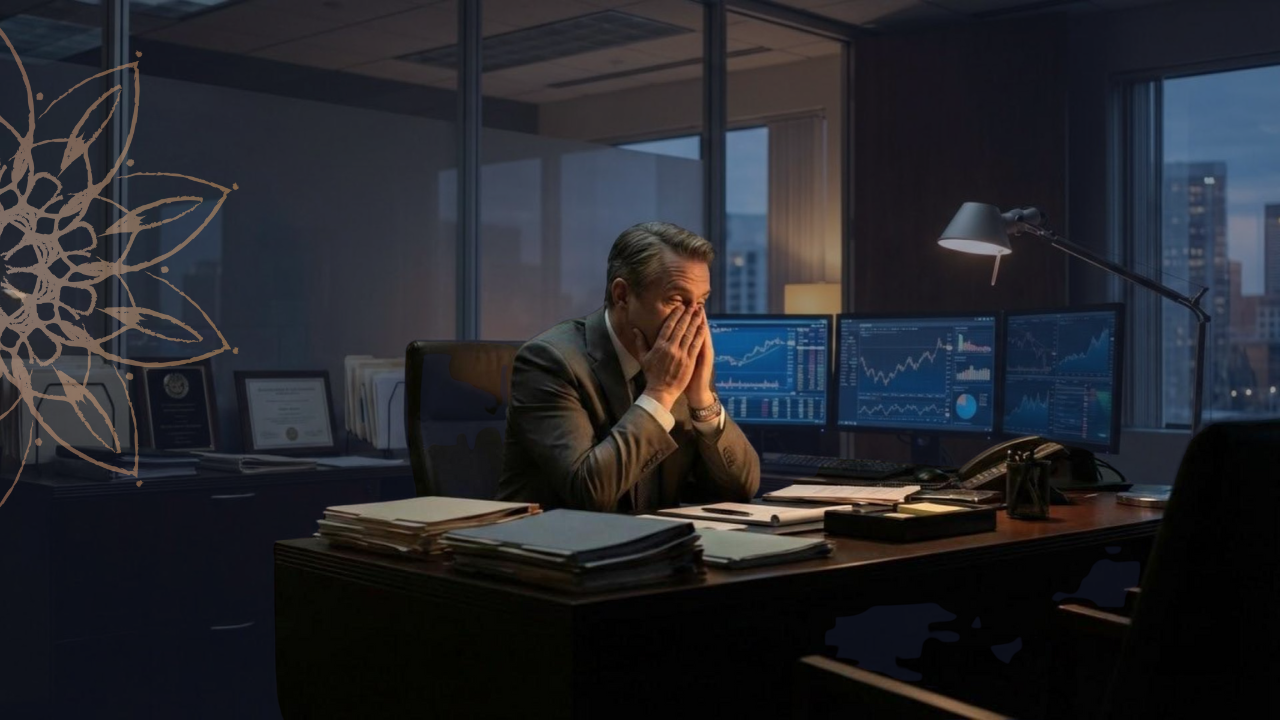
Burned Out but Still Performing: Emotional Exhaustion Among Today’s Top Professionals
Dec 16, 2025From the outside, everything looks solid.
Your production is steady. Your pipeline is active. Your reputation in the market is strong. You’re still closing deals, still leading conversations, still showing up for clients and your team.
But internally, something feels different.
You’re tired in a way rest doesn’t fully fix. Wins don’t land the same way they used to. Tasks that once energized you now feel heavier. You’re still performing, but it takes more effort, more focus, and more emotional energy than it ever has before.
This is emotional exhaustion — and it’s becoming increasingly common among top-performing real estate professionals nationwide.
Not because they’re failing.
But because they’ve been succeeding for a long time without enough structural support.
What Emotional Exhaustion Really Looks Like in Real Estate
Emotional exhaustion doesn’t show up as collapse or burnout in the dramatic sense. It’s subtle, and that’s what makes it dangerous.
It looks like hesitation before returning a call.
Irritability over small issues.
Avoidance of strategic thinking because it feels overwhelming.
A constant sense of being “on,” even when you’re technically off the clock.
For high performers, this can be confusing. You’re doing everything right. The numbers still work. The business is still moving. So you tell yourself to push through.
But emotional exhaustion isn’t about motivation or discipline. It’s about capacity.
When the emotional load of running a business, managing people, navigating market shifts, and carrying client expectations grows faster than your systems can handle, your nervous system starts to pull back. Focus slips. Creativity fades. Decision-making slows.
And because you’re still producing, it’s easy to miss the warning signs.
Why Top Agents Are Especially Vulnerable
The same traits that make you successful can make emotional exhaustion harder to recognize.
High standards mean you rarely let things slide.
Responsibility means you carry more than your share.
Experience means others rely on you to “just handle it.”
Over time, this creates a pattern where every decision, every problem, and every exception routes through you. You become the solution to everything in your business.
What starts as leadership slowly turns into constant emotional labor.
And emotional labor, when left unaddressed, drains energy faster than long hours ever could.
When Emotional Exhaustion Turns Into Paralysis
Left unchecked, emotional exhaustion often leads to decision paralysis.
You know something needs to change, but everything feels equally urgent and equally exhausting. You delay decisions not because you don’t care, but because you don’t have the clarity or bandwidth to choose the right next move.
Growth starts to feel risky instead of exciting.
Opportunities feel like obligations.
And the business you built to create freedom starts to feel heavy.
This isn’t a personal failure. It’s a structural signal.
It’s your business telling you it has outgrown the way it’s currently being run.
Emotional Exhaustion Is Not a Mindset Problem
This is an important distinction.
Emotional exhaustion isn’t something you fix with better habits, more grit, or a stronger morning routine. Those things help, but they don’t solve the root issue.
For most successful real estate professionals, exhaustion comes from inefficiencies, overloaded roles, unclear responsibilities, and systems that require too much emotional effort to maintain.
When too many decisions depend on you, when too much work lives in your head, and when too many processes rely on memory instead of structure, your energy becomes the bottleneck.
And no amount of motivation can fix that.
What Sustainable Recovery Actually Looks Like
Recovery for high performers doesn’t mean stepping away from the business entirely. It means redesigning it so it stops pulling from your emotional reserves unnecessarily.
That starts with clarity.
Clarity around what only you should be doing.
Clarity around what can be delegated, systemized, or simplified.
Clarity around where inefficiencies are quietly draining time, focus, and momentum.
When friction is removed, emotional energy returns naturally. Focus sharpens. Confidence rebuilds. Decision-making becomes easier.
Not because you changed who you are — but because the business finally supports who you are now.
This Is Where Outside Perspective Matters
When you’re inside the business every day, it’s nearly impossible to see what’s creating the most drag. Emotional exhaustion often hides in places that feel “normal” simply because they’ve been that way for a long time.
This is where an outside set of eyes can make all the difference.
At Growth-Minded Talent Solutions, we work with successful real estate professionals across the country who are still performing at a high level — but quietly running on emotional fumes.
Through a free business evaluation, we help uncover the hidden inefficiencies that contribute to emotional exhaustion and decision paralysis. We look at how work flows through your business, where responsibilities are misaligned, and which gaps are forcing you to carry more than you should.
The goal isn’t to overhaul everything. It’s to identify the few pressure points where small, strategic changes can create immediate relief and renewed clarity.
A Final Thought
If you’re burned out but still performing, you’re not broken — and you’re not alone.
You’ve simply reached a point where effort alone is no longer enough. The next level of success requires structure, support, and intentional design.
📅 If you’d like help identifying what’s creating friction and paralysis in your business, schedule a free business evaluation with Growth-Minded Talent Solutions.
It’s a low-pressure conversation designed to help you move out of overwhelm and back into sustainable, confident growth.
Because success shouldn’t come at the cost of your emotional well-being.
And with the right structure in place, it doesn’t have to.
If you decide that hiring isn’t something you want to do (hey, we get it, you got into this business to what you do best, not HR!) — schedule a call with us today. We’d be happy to help.
